
Marine PPF vs Automotive PPF: Why Your Boat Needs a Different Film
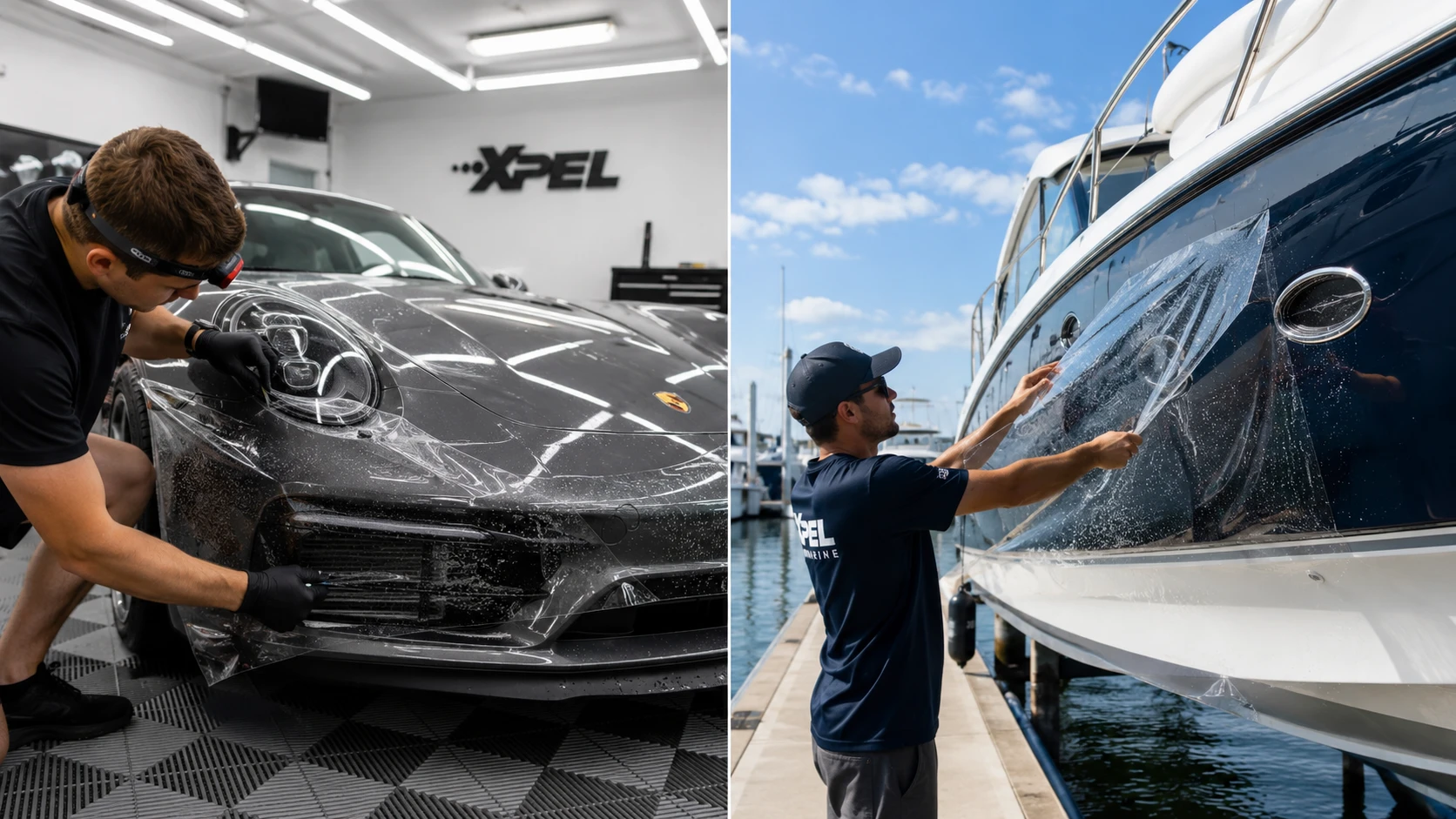
Automotive PPF is engineered to resist road debris and highway conditions, while Marine PPF is formulated specifically for constant saltwater exposure, UV intensity on open water, and repeated dock contact. Using automotive-grade film on a boat often leads to premature edge lifting and saltwater intrusion that marine-specific film is designed to resist.
Why Saltwater Changes Everything
Saltwater is far more corrosive and penetrating than road grime, and it constantly contacts a boat's hull in ways a car's paint never experiences. Automotive film adhesives aren't formulated to resist saltwater intrusion at the seams, which is why standard PPF can lift and fail faster when applied to a hull.
UV Exposure on the Water Is More Intense
Boats spend hours in direct, unobstructed sunlight with UV reflection off the water adding to overall exposure, which accelerates degradation compared to a car parked or driven under partial shade. Marine PPF is built with UV-stable formulas specifically calibrated for this higher exposure level, similar to how XPEL ULTIMATE PLUS and STEALTH are formulated for Florida's intense automotive UV conditions.
Impact and Handling Differences
Cars experience rock chips and road debris; boats experience dock scuffs, fender contact, and handling scratches during mooring and launching. Marine PPF's self-healing topcoat is tuned to respond to these specific types of surface contact rather than high-speed highway impact.
Can You Use Automotive PPF on a Boat?
Technically it can be applied, but it typically underperforms - expect faster yellowing, earlier edge lifting, and reduced saltwater resistance compared to purpose-built marine film. For a vessel that spends real time on the water, the marine-specific formulation is worth the difference.
FAQ
Can automotive PPF be used on boats in a pinch?
It can be applied, but it will likely fail faster due to saltwater exposure and higher UV intensity than it's designed to handle.
Does Marine PPF work above and below the waterline?
Yes - it's formulated to resist saltwater staining and intrusion in both zones, unlike automotive film not designed for constant water contact.
Is Marine PPF more expensive than automotive PPF?
Pricing depends on vessel size and coverage area, but the material itself reflects its specialized saltwater-resistant formulation.
Does Marine PPF yellow faster than automotive film in strong sun?
No - it's specifically UV-stabilized for the more intense, reflective sun exposure boats experience on open water.
How often does Marine PPF need replacing?
Durability depends on usage and water conditions, but properly installed marine film typically lasts several boating seasons before reapplication.
Protect your vessel's gelcoat with our XPEL Marine Paint Protection Film service.
Related reading: How Long Does Paint Protection Film Last? | XPEL ULTIMATE PLUS vs XPEL STEALTH

Related Articles
Miami’s Elite Car Wraps: Designs That Define Status
In a city where luxury is a lifestyle and first impressions are everything, your car is more than just a mode of transportation - it’s a statement of success, taste, and individuality. Miami’s streets are a runway for the elite, where Ferraris, L...
Turn Heads Instantly: Get a Show-Stopping Vinyl Color Change in Miami
Looking to give your vehicle a bold new appearance without committing to permanent paint? At AWS Wrap, we specialize in premium vinyl color change services in Miami, helping drivers completely transform their cars in just a few days. Whether you want...
Ceramic vs Dyed vs Metallic Window Tint: Why It Matters in Miami
Window tint isn't a single product - dyed, metallic, and ceramic films perform very differently in heat rejection, durability, and signal interference, which matters significantly in a climate as demanding as Miami's. Choosing the wrong t...
How the Price of Paint Protection Film Has Changed in Miami (2023 vs. 2026)
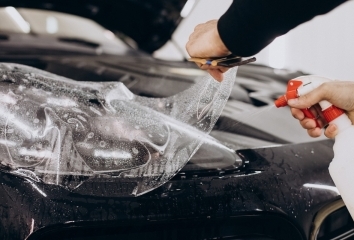
If you’ve been considering paint protection film in Miami over the past few years, you may have noticed that prices have fluctuated significantly - sometimes rising, sometimes stabilizing, and occasionally even dropping for certain services. Betwee...
Car Design in Miami: Built Around Your Vision
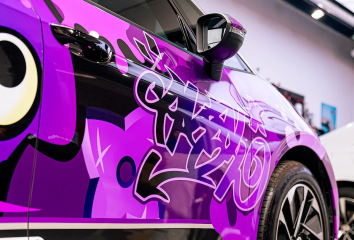
In a city like Miami, where style, luxury, and individuality define the culture, your vehicle should be more than just transportation — it should be a reflection of your personality and vision. Whether you want a bold transformation, subtle enhance...
Change Your Car Color in Miami with Premium Vinyl Wraps
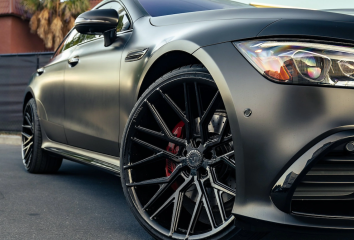
If you’ve ever thought about giving your car a completely new look, you don’t need an expensive and permanent paint job to do it. With vinyl color change wraps in Miami, you can transform your vehicle in just a few days — with endless design op...
Car Wraps in Miami: Make Your Ride Unique with These Top Trends
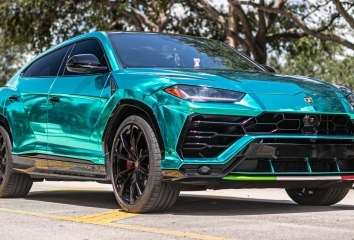
Miami is a city where style, individuality, and first impressions matter. Whether you're cruising down Ocean Drive, Brickell, or A1A, your car isn’t just a mode of transportation - it’s a statement. And in a city filled with luxury cars, exotic r...
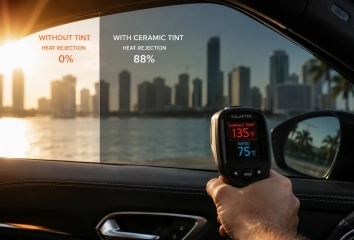
XPEL PRIME XR BLACK vs XR PLUS
XPEL PRIME XR PLUS is a ceramic window film built for maximum heat rejection and signal clarity, while XPEL PRIME XR BLACK offers strong heat rejection at a more accessible price point with a deeper black appearance. Both are non-metallic ceramic fil...
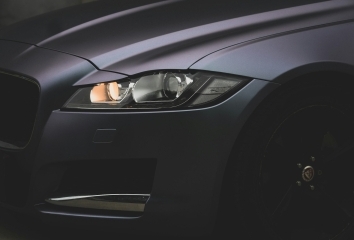
Matte vs. Gloss Car Wraps: How to Choose the Perfect Finish
Choosing a car wrap is an exciting way to transform your vehicle’s appearance, but one of the biggest decisions you’ll face is selecting the right finish. Matte and gloss wraps are the two most popular options, each offering a distinct look and f...
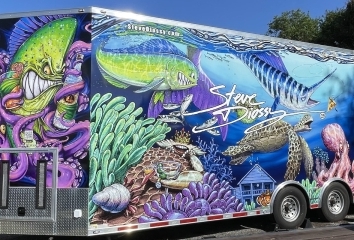
How Long Do Commercial Fleet Wraps Last Before a Redesign Is Needed
Commercial fleet wraps typically last 5-7 years under normal conditions, but Miami's intense sun and daily driving mileage often shorten that window compared to fleets in milder climates. Knowing what actually causes a wrap to age helps you plan a re...
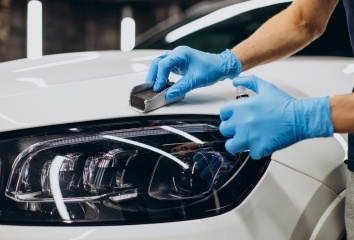
Ceramic Coating vs Wax: Why South Florida Cars Need More Than a Wax Job
Wax has been the default paint protection product for decades, but in South Florida's climate it breaks down within weeks rather than months, leaving cars exposed to UV fading and water staining for most of the year. Ceramic coating solves the durabi...
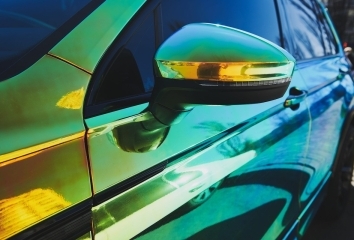
Complete Color Change Wraps in Miami
If you’re looking to completely transform your vehicle without the cost, downtime, or permanence of a traditional paint job, complete color change wraps in Miami are the ultimate solution. Whether you want a sleek matte finish, a high-gloss showroo...

